Pre-construction phase
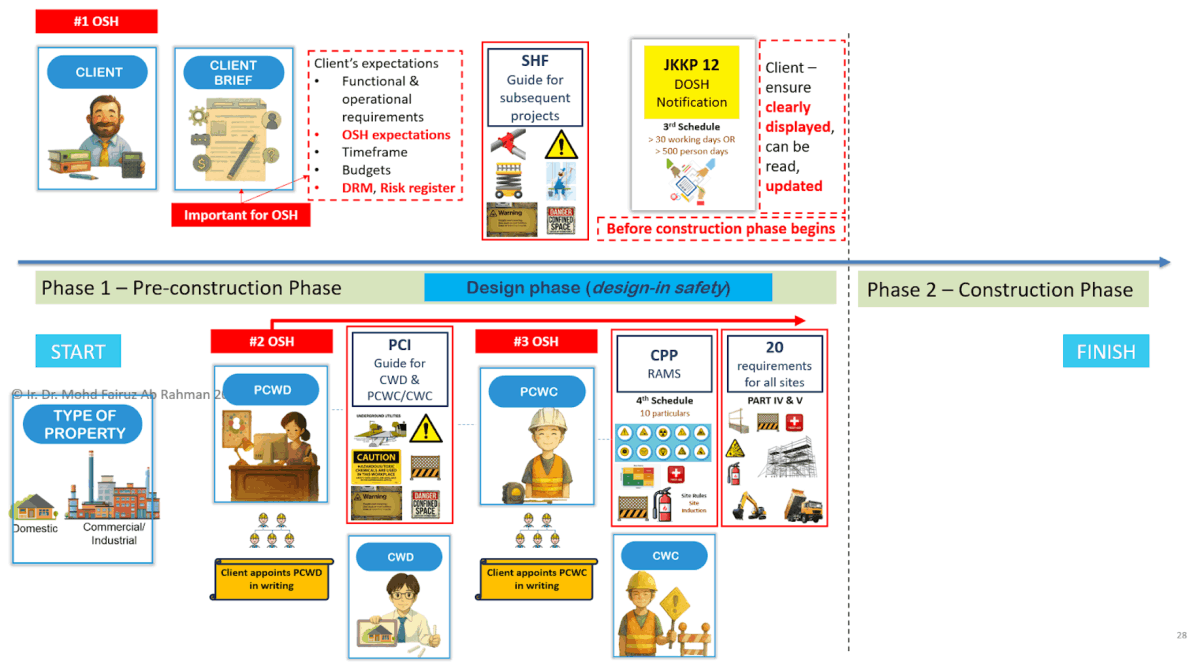
This is effectively the design and planning phase. The focus is to design in safety, remove risks where possible, and prepare information before work reaches site.
A practical OSHCDM reference for Malaysian construction teams who need to connect legal duties with design choices, coordination work, and project decisions.
Guide Topics
Understand where CDM starts, how pre-construction and construction phases connect, and which documents keep the project traceable.
PCI FocusSet client expectations early so tender pricing, resource allocation, CPP rules, and project culture are aligned from the start.
Guide 02Read OSHA duties through self-regulation, AFAIP, general duties, and risk assessment instead of checklist-only compliance.
Guide 03Rujukan Bahasa Malaysia untuk struktur CDM, tafsiran projek, tempat kerja, dan peranan Bahagian IV.
Guide 01
The Occupational Safety and Health (Construction Work) (Design and Management) Regulations have applied in Malaysia since 1 June 2024. CDM replaced BOWECS as the core construction OSH framework and applies to places of work where construction projects are carried out, with no minimum project threshold.
This is effectively the design and planning phase. The focus is to design in safety, remove risks where possible, and prepare information before work reaches site.
The project moves into site execution, construction phase planning, welfare, supervision, coordination, and continued updates to the safety and health file.
Sets expectations, budget, resources, timelines, and early OSH requirements. The client appoints PCWD and PCWC in writing where required.
Coordinates pre-construction information and design risk decisions. CWD covers anyone who prepares, modifies, arranges, or instructs design work.
Leads the construction phase, prepares and manages the CPP, coordinates site work, welfare, supervision, and contractor communication.
PCI informs the project, CPP controls the construction phase, and SHF preserves information needed for future maintenance, repair, and later works.
PCI Focus
Under CDM, the client's safety and health goals should be stated in the Pre-Construction Information pack, especially under the client's considerations and management requirements. This gives the whole project team a clear standard before design, tender, and site planning decisions are locked in.
Require the design team to remove high-risk items before site work, including unsafe roof access, fragile roof assemblies, and steelwork that cannot support planned temporary protection.
Set maintenance and cleaning goals that protect future users, including safer window cleaning, ground-level plant access, and permanent roof-edge protection where required.
Use collective protection before individual PPE. For example, prefer fixed edge protection and dust elimination at source over harness-only or PPE-only controls.
Keep significant project-specific risks brief and visible through drawing annotations, SHE boxes, and clear warning symbols that the people building the work can actually see.
Use early contractor involvement and joint risk workshops before the design is frozen, including practical options such as early permanent stair access.
Support a zero harm vision without hiding incidents. Measure near-miss learning, stop-work empowerment, blame-free investigation, and continuous feedback into site conditions.
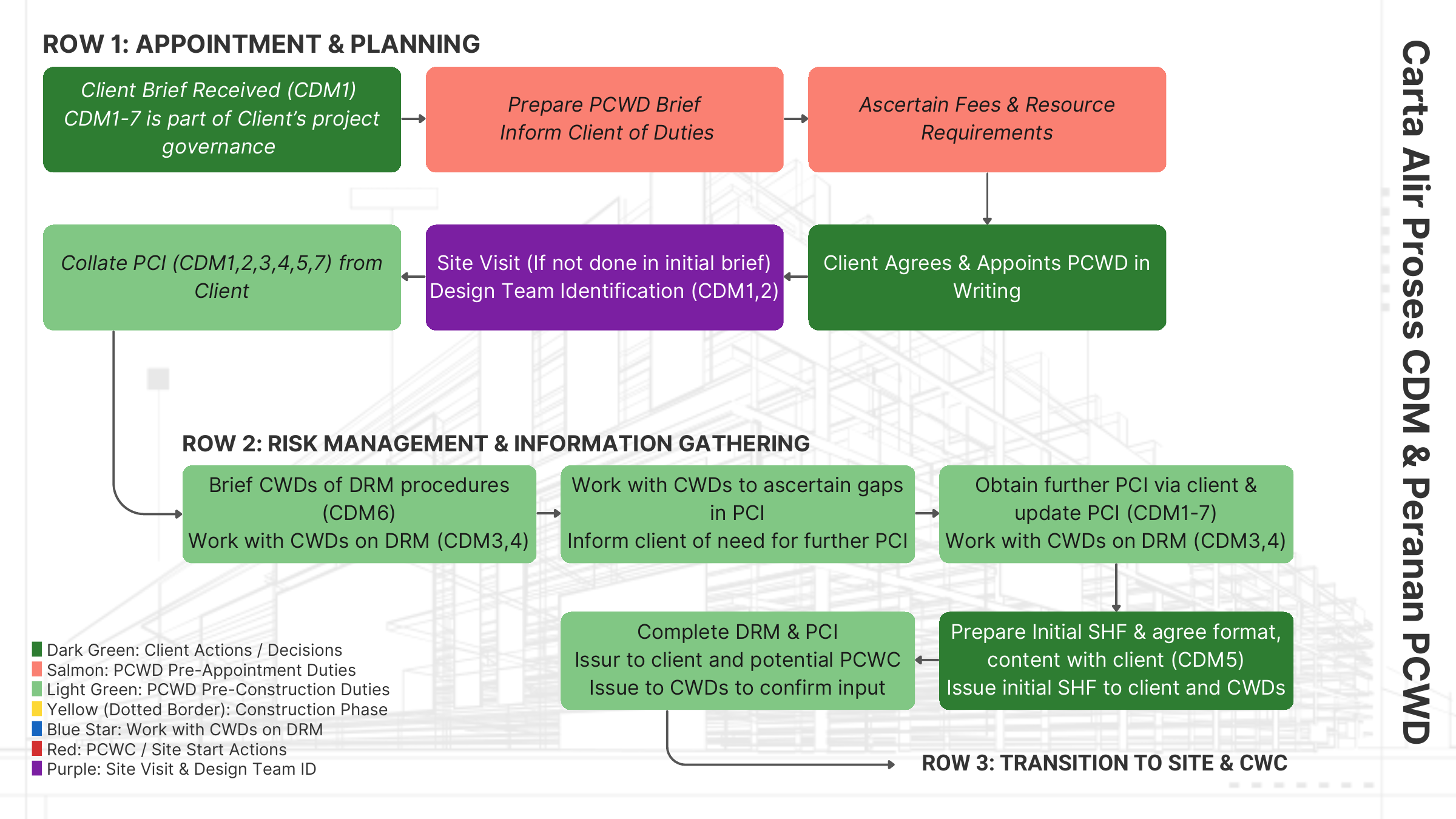
Design Risk
Construction work designers must apply the general principles of prevention by eliminating risks where possible, then reducing or controlling remaining risks through design, specification, sequencing, access, and maintainability decisions.
Guide 02
Modern occupational safety and health law is built around self-regulation, broad general duties, and evidence that risks have been properly identified, assessed, controlled, and monitored.
The duty holder must be able to show that practical steps were taken to identify and control risks. The question is not only whether a rule was followed, but whether the risk was managed.
General duties set broad accountability for clients, designers, contractors, employers, and other duty holders according to their control over the work.
Risk assessment is a systematic evaluation of hazards and risks. It must lead to suitable measures, implementation, and monitoring, not just a completed form.
Ask whether the risk sits within the duty holder's scope, whether any mandatory requirement applies, and what practical controls are reasonably available.
Guide 03
CDM disusun dalam 5 bahagian. Bahagian I mengandungi tafsiran penting seperti projek, tempat kerja, fasa pra-pembinaan, fasa pembinaan, dan peranan pihak berkewajipan.
Dari perspektif CDM, projek bermula daripada perancangan dan reka bentuk, kemudian bergerak melalui pengurusan dan penyelarasan sehingga kerja pembinaan selesai.
Perkataan "sehingga selesai" memberi batas masa yang jelas: projek CDM berakhir apabila fasa pembinaan telah tamat.
Bahagian IV
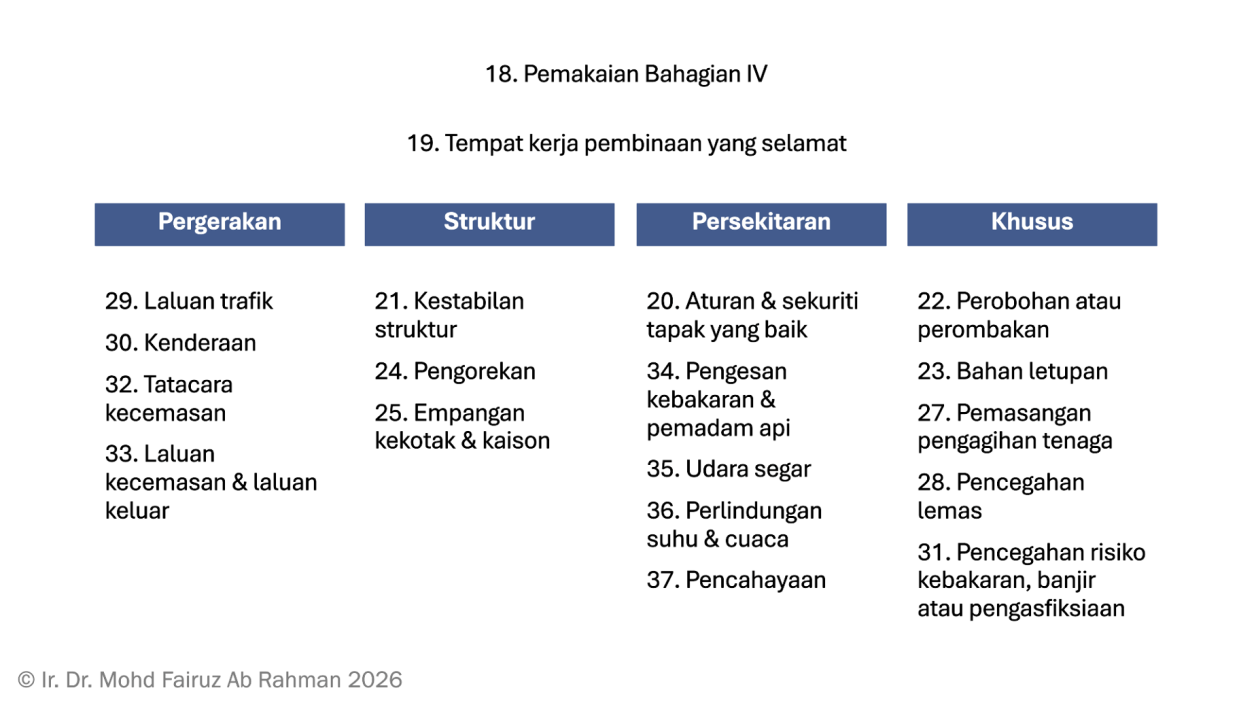
Bahagian IV menumpukan kawalan bahaya biasa di tapak pembinaan. Ia membantu pasukan projek melihat isu tapak mengikut kumpulan pergerakan, struktur, persekitaran, dan kerja khusus.
Industry Position
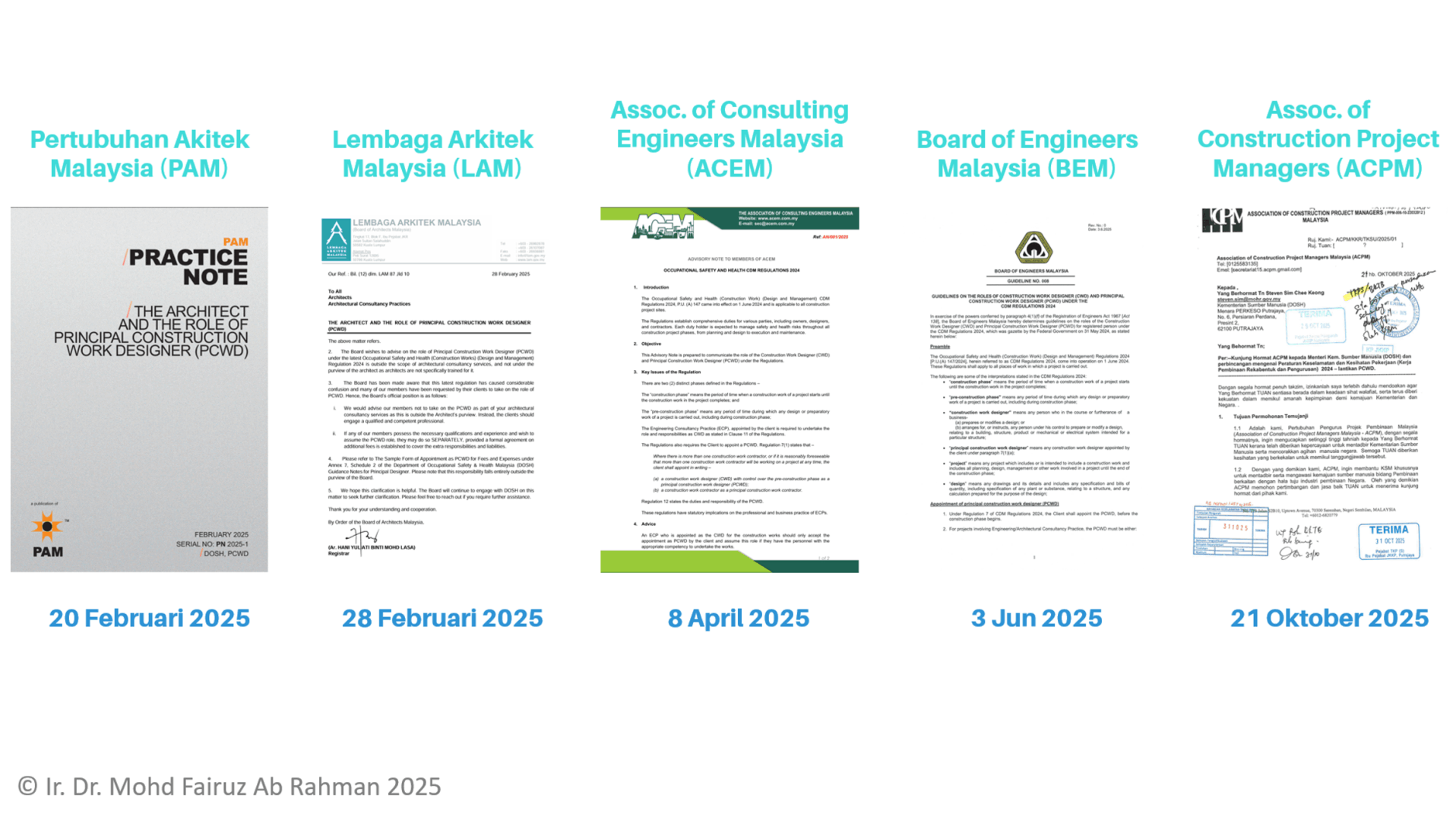
The practical effect of CDM is wider KKP responsibility during project planning, design, construction, and handover. Professional teams need competence, clear appointment terms, and project-specific scope when accepting PCWD, CWD, PCWC, or CWC responsibilities.
Use The Guide
Use this page as a starting point, then move into the CDM module, training, or template set for project-level implementation.